VENUE
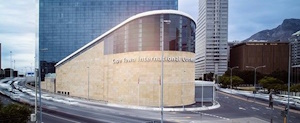
CTICC
|
FIG2026 Venue – Physical address
Convention Square
1 Lower Long Street
Cape Town 8001
South Africa
Website: www.cticc.co.za
FIG sends
its warmest wishes to all Muslim attendees on the occasion
of Eid al-Adha and proudly highlights the
availability of a dedicated prayer room at the CTICC.
|
 |
Parking
Parking is free of charge for all attending the conference and
exhibiting - Pre-paid parking vouchers will be available at
registration.
With over 1,400 secure visitor parking bays available, making your
way to CTICC events is that much simpler. Accessible parking bays
are available in P3 and P5 Parking. Read more:
Visitors
Parking CTICC.
Directions to CTICC
Google Maps – CTICC
Virtual tour Click here
for CTICC virtual tour
Emergency procedures at the convention centre
Download all the emergency
procedures for the convention centre.
In case of fire
- Upon discovering a fire, close the door to the room where the fire
is located and immediately sound the center’s fire alarm by breaking
the closest break glass unit.
- Call EXT 5252, and give your name, your LOCATION and the location
of the fire.
- If the fire is large, very smoky, or rapidly spreading, leave the
area immediately. The alarm may not sound continuously. If the alarm
stops, continue the evacuation. Warn others who may enter the
building after the alarm stops.
- WALK, DO NOT RUN, to the nearest fire exit stairway if not on
ground level.
- When the fire alarm sounds, do not use any lifts or escalators. It
may become inoperable and a trap! Give assistance to disabled
persons using stairs.
- Evacuate to applicable indicated assembly points. DO NOT RETURN to
the building until instructed to do so by the security or fire
personnel.
- Notify either the CTICC security or fire personnel on the scene if
you suspect that someone may be trapped inside the building.
- Note: Detailed procedures for disabled persons are available later
in this Evacuation Plan
- Safety precautions before using a fire extinguisher.
- If the fire is small and you can contain it, then use equipment
but if the fire is out of control, leave the area. All people are to
evacuate if there is a fire.
- Sabotage and normal wear and tears can cause a fire extinguisher
to become a great danger to the user. Before using any extinguisher,
the following must be done:
- Inspect for any damage. (The lid of the extinguisher is unscrewed
until it is held in position by only one thread. This lid can blow
off and kill the user).
- If damaged, do not use.
- Ensure that the extinguisher is the correct one for the fire.
- Ensure that the contents are as stated on the label.
- When activating the extinguisher kneel next to it with the face
turned away.
Do’s and don’ts of fire–fighting
- Only certified people are permitted to use the fire equipment to
engage in firefighting. Exhibitors or organiser to have their
appointed person(s) for the function.
Do’s
- Ensure that back-up assistance is available before tackling a
fire.
- Ensure that an escape route is accessible before committing
yourself to tackling the fire.
- Follow instructions on the extinguisher’s label.
- Break the seal and remove the safety device.
- Check the operation of the unit by briefly activating the control
mechanism before approaching the fire.
- Apply the extinguishing medium at the base of the flames and move
the nozzle with a rapid side-to- side action.
- Drive the flames away from you.
- For vertical fires start at the base of the flames and move
upwards.
- If the fire is outdoors, approach it from the windward side.
- When approaching the fire adopt a crouching attitude that provides
some protection against heat and smoke.
- Be alert to any changes in the fire pattern.
- When tackling a fire that involves electrical equipment isolate
the power as soon as possible to prevent re-ignition.
- Ensure that the fire has been completely extinguished and that no
sparks remain.
Dont’s
- Do not put yourself at risk. If the fire is too big or starts to
spread, evacuate the area immediately.
- Never tilt or invert any extinguisher while operating it unless it
is the type that you turn over.
- When extinguishing a fire that arose from a flammable spillage,
never walk on the spillage area in case the flames flash back.
- When tackling flammable liquid fires use a controllable discharge
type of extinguisher medium until the fire is completely
extinguished.
- When the fire has been extinguished, back off slowly and never
turn your back on it.
Elementary elements to starve the fire
On discovering a fire, you must do everything possible to starve it
by removing the oxygen and/or combustible material.
- Close doors and windows.
- “Blanket” (smother) a small fire with a bag.
- Throw sand on the fire.
In case of serious injury
- Do not move a seriously injured person unless it is a
life-threatening situation.
- Find the closest phone and call EXT 5252.
- Give your name, LOCATION, and the telephone extension you are
calling from.
Give as much information as possible regarding the nature of the
injury or illness, and whether or not the patient is conscious.
- Emergency Medical Services will respond to the scene.
- Return to the patient.
- If you are a TRAINED FIRST AIDER, provide necessary first aid
until Emergency Medical Services arrive.
- Remain with the patient until Emergency Medical Services arrive.
- Check for any Medic Alert bracelets or pendants with an
inscription indicating a medical condition, (i.e., Diabetes,
Epilepsy, Allergies etc.)
- If so, bring this to the attention of the responding emergency
medical officer.
- Report all emergencies to the Security Department immediately on
EXT 5252
In case of bomb threat
- Bomb threats usually occur by telephone.
- The person receiving a bomb threat should remain as calm as
possible and attempt to obtain as much information as possible from
the caller. Write down the exact words used in the threat while they
are still fresh in your memory.
- Call EXT 5252, give your name, LOCATION, and telephone extension.
Inform the security department of the situation, including any
information you may have as to the location of the bomb, time it is
set to detonate, and the time you received the call.
- The Security Department and Fire marshals will be responsible for
building evacuation once the instructions to do so is received from
the Emergency Management Team.
- If you should spot a suspicious object, package, etc. report it to
the Security Department, but under no circumstances should you touch
it, tamper with it, or move it in any way. Call EXT 5252.
- If instructed to evacuate, move a safe distance away (500 meters)
from the building or behind barriers as directed. If severe weather
conditions exist, you may move to another building a safe distance
away.
- DO NOT re-enter the building until it is declared safe to do so.
In case of armed robbery
- Do not attempt to stop the robbers if you are unarmed.
- Never stop armed robbers unless you are confident of succeeding.
- Think carefully and exercise caution regarding the lives of
employees and customers.
- Collect relevant information about the transgressors:
- Full personal description
- Distinguishing features
- Firearms/weapons used
- Direction of departure
- Description of getaway car
- Report this information to Control Room immediately.
- Attend to injured people.
- Keep curious people away.
- The safety of the people on the premises is the Security
Officials’ top priority.
In case of natural disaster
- Assess the situation.
- Determine the extent of the damage and possibly imminent dangers.
- Relay situation report to the Control Room.
Evacuation
- Partial Evacuation
- Partial evacuation is the withdrawal of a group of people from a
specific area that might pose a threat to human lives or be a source
of injury to persons.
- The advantage of partial evacuation is that the risk of injuries
is minimized and fewer people are left moving about.
- Some employees are still available to conduct a search of the area
and assist.
Essential services can continue.
- General Evacuation
- General Evacuation is the total withdrawal of people from the
premises/building to an assembly area situated well away from where
the threat might endanger them.
- People can be injured in the rush to evacuate (particularly if
they are not well-trained).
- Employees are not available to help search the premises after the
evacuation.
- All services must be suspended, including the essential services.
- Evacuation Procedure
- Stop doing what you are doing.
- Lock away all valuables.
- Pack papers away if possible.
- Switch off all electrical appliances
- Take handbag with you and ask visitors to accompany you.
- Escort physically challenged (disabled) persons to the nearest
Fireman’s lift that is appropriate for their departure.
- Evacuate via the shortest routes.
- Do not run.
- Always keep left.
- Do not use the lifts, only for physically challenged people and
emergency personnel.
- Congregate at the assembly area.
- Wait for further instructions.
The CTICC’s Emergency Management Team
The CTICC’s Emergency Management Team will oversee all the
communications and instructions in the event of an emergency and
will decide whether the fire brigade and other civil emergency
services must be summoned. They will decide whether evacuation of
staff is necessary and, if so, the extent thereof. Incidents
involving injured and disabled persons should be reported to the
Mediclinic who will arrange for their evacuation from the premises.
The fire department will take the decision as to whether the
building may be re-occupied.
The venue Risk Management Team
The venue Risk Management Team will oversee all the communications
and instructions in the event of an emergency and will decide
whether the fire brigade and other civil emergency services must be
summoned. They will decide whether evacuation of staff is necessary
and, if so, the extent thereof. Incidents involving injured and
disabled persons should be reported to the Management Control Centre
on immediately on 021 406 1456 who will arrange for their evacuation
from the premises. The fire department will take the decision as to
whether the building may be re-occupied.
Security Deployment
In the event of an evacuation, security staff at the entrances will
remain at their posts to assist with the evacuation. Staff will
ensure that the doors are unobstructed, unlocked, and open and that
there is a safe passage for people moving out of the building. No
person will be allowed to enter or re-enter the building during the
evacuation. Only emergency staff will be permitted to enter via
these access control points.
ERT (Emergency Response Team) Unit
The venue’s ERT Members will be responsible to ensure that the areas
allocated to them are evacuated and to assist with any emergency
that may occur during such evacuation.
Emergency Response Team - EXT 5252.
Third-Party Security
- Any third-party security hired in by a client will be responsible
for the evacuation and securing of the area under their control. The
third-party security company will however report to and receive
instructions in this regard from the CTICC security who will be
acting under instruction from the Emergency Management Team.
- A two-way radio will be made available to the third-party security
company to facilitate communication with the CTICC Control room.
This radio station must be signed out from the Control room upon
arrival on site and must always be in the possession of the senior
officer on site.
- The management of any third-party security deployed on site will be
responsible for ensuring that all their staff is conversant with the
content of this document. Any possible emergency conditions must be
reported to the CTICC Control room who will escalate it to the
Emergency Management Team who will make the decision as to what
action should be taken.


